
Product Presentation: How Your Product Starts a Conversation
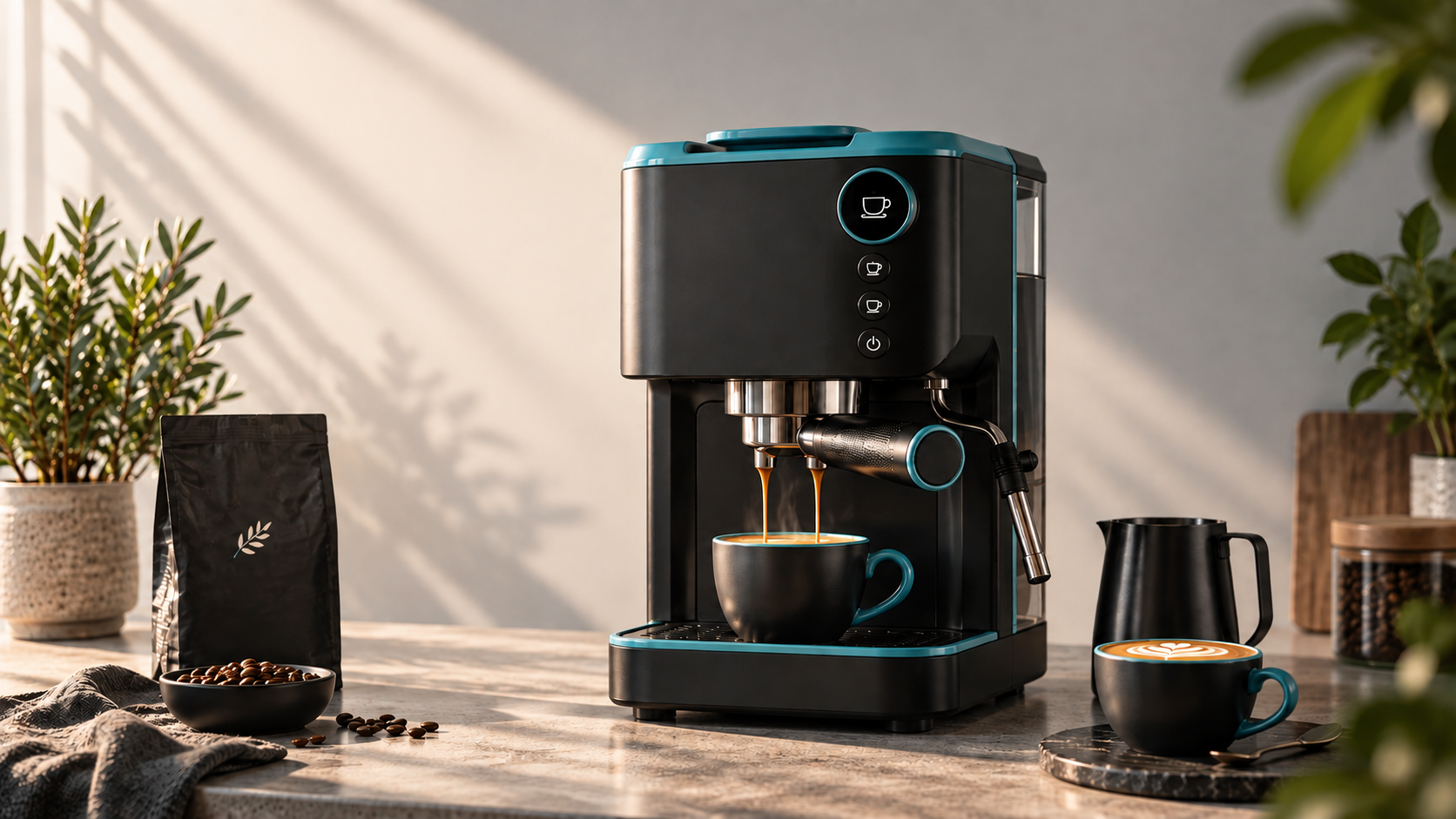
An espresso machine sits on a kitchen counter.
1,350 watts. Thermoblock heating system. 15-bar pump pressure. 1.2-liter water tank. Steam wand.
We already know quite a bit about the machine.
But do we actually feel like having an espresso?
Probably not.
So let’s give our fictional espresso machine a name: Dolce Vita.
You open a bag of coffee beans from your favorite brand. Their delicious aroma immediately fills the air.
Your mouth starts watering.
You pour the beans into the machine. Looking forward to that first cup, you place your espresso cup beneath the portafilter. At the press of a button, the grinder starts working.
A few seconds later, the first espresso of the day flows into your little cup. Dark, hot, topped with a delicate layer of crema.
A perfect start to the day.
As the smell of freshly brewed coffee fills your kitchen, you remember that little café where you had your first espresso every morning during your last vacation in Italy.
In that moment, the espresso machine represents more than just coffee. It represents a way of life.
And whatever the day has in store for you, you’re ready.
Dolce Vita. Your espresso. Your moment.
______________________________________________
Does that sound like an espresso machine with 1,350 watts, a thermoblock heating system, 15-bar pump pressure, a 1.2-liter water tank, and a steam wand?
Or does it sound more like the next coffee commercial featuring George Clooney?
Technically speaking, both are product presentations.
And that’s exactly why it’s worth looking at product presentations from a perspective beyond SEO, conversion rates, and product data.
From the perspective of rhetoric.
A Product Page Communicates
When we talk about rhetoric, we tend to think of speeches, presentations, or perhaps a conversation between two people.
At first glance, a product page seems pretty far removed from all that.
But it isn’t.
Product titles, images, descriptions, technical specifications, and bullet points communicate information. They establish priorities. They answer questions. And they influence how a product is perceived.
Every one of these touchpoints communicates with the customer. I first applied this idea to my work in e-commerce during my training as a rhetoric and communication trainer.
There’s just one important difference compared with a normal conversation:
The customer can’t ask my product page a follow-up question.
At least not yet.
That’s why I need to anticipate those questions.
What Matters to the Person I’m Talking To?
One of the most important questions in rhetoric translates surprisingly well into e-commerce:
What actually matters to the person I’m talking to?
With our espresso machine, we might be particularly proud of its thermoblock heating system.
But the customer might be thinking:
How long will I have to wait for my espresso in the morning?
We talk about its compact design.
They’re wondering:
Will this thing even fit next to my toaster?
We mention the 1.2-liter water tank.
To the customer, that might mean:
How often am I going to have to refill it?
The product feature hasn’t changed. We’ve simply looked at it from a different perspective.
That’s a fundamental principle of good argumentation: I need to understand what matters to the other person, what they want, and which information is relevant to their decision. These were also the questions that originally led me to apply rhetorical principles to product presentations.
In e-commerce, the question becomes:
What does this product feature mean to my customer?
Turning a Feature into an Argument
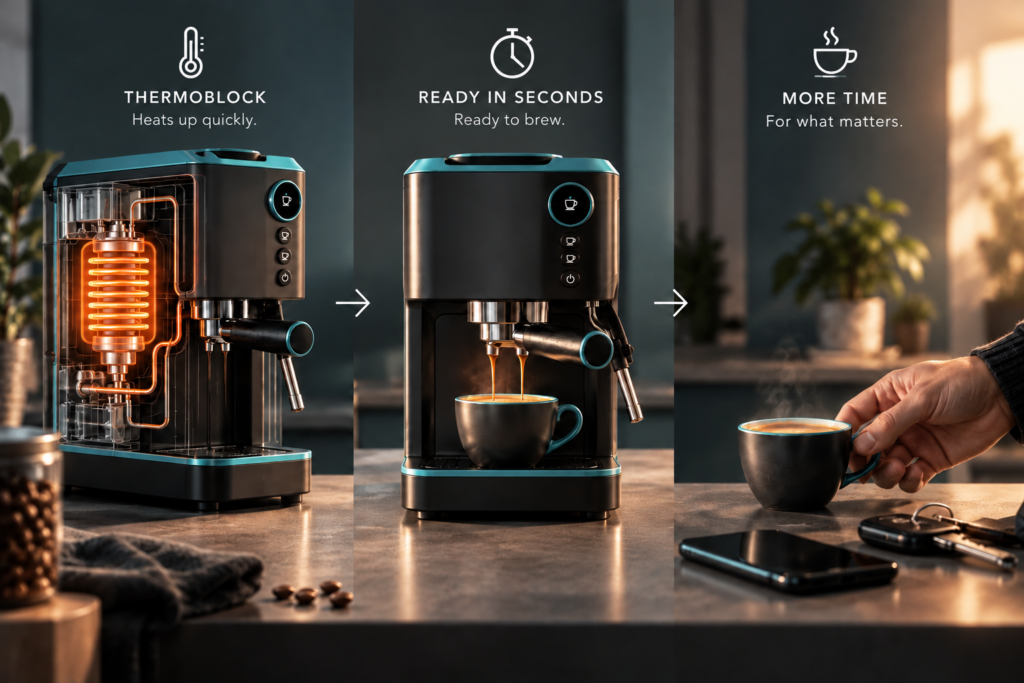
Let’s take the thermoblock heating system.
Feature: Thermoblock heating system
Benefit: The machine reaches its operating temperature quickly.
Meaning: The customer doesn’t have to wait long for their morning espresso.
It’s only at the third level that we really connect with the customer’s everyday life.
That doesn’t mean we should hide technical specifications. Quite the opposite. Anyone who wants to know which heating system the machine uses should be able to find that information easily.
But a good product description also translates technical information into something the customer can relate to.
This works for all kinds of products.
A compact design means more space on a small kitchen counter. A large battery means charging less frequently. A particular material may offer advantages in durability, weight, or maintenance.
Which benefit matters depends on the product and the person considering it.
So Now We’re Turning Coffee into the Italian Way of Life?
Now we’re entering dangerous territory. 😄
After all, our machine is called Dolce Vita. We could have the sun rising over Tuscany, a Vespa passing through the scene, and of course, an enviably relaxed Italian enjoying an espresso in a beautiful piazza.
Sure. We could do that.
But at some point, our customers might still want to know whether the machine will fit in their kitchen.
Storytelling can add another dimension to a product presentation. A name, visual language, and copy can create certain associations. A kitchen appliance can become part of a morning ritual.
But a story doesn’t replace information.
With our Dolce Vita, that sense of lifestyle could provide the introduction. After that, we still need to answer the questions that matter to the purchase decision.
How big is the machine?
How quickly is it ready to use?
What size cups fit underneath?
How do I clean it?
Can I use it to froth milk?
And what exactly am I getting for my money?
The skill isn’t in making the copy as emotional as possible.
It’s knowing when emotion helps and when the customer simply needs a clear answer.
Good Product Communication Requires Clarity
This is also where rhetoric is often misunderstood.
Good rhetoric doesn’t mean wrapping a simple statement in the most elaborate language possible.
In e-commerce, going overboard would actually be pretty counterproductive.
If someone wants to know whether their favorite mug, which is 12 centimeters tall, will fit under the machine, a story about Mediterranean happiness won’t help.
They need to know that the machine offers 12.5 centimeters of cup clearance.
Clarity can be the most persuasive argument on a product page.
Storytelling can work beautifully for an emotional product. For a complex product, customers may need explanations and supporting evidence. With accessories, compatibility and technical specifications might be the main priorities.
Even when I first explored this idea, I arrived at a fairly simple conclusion: Some products tell a story. Others persuade through clarity. The communication needs to suit both the product and the customer.
Let the Images Do the Talking
Of course, product communication isn’t limited to written copy.
Let’s stay with Dolce Vita.
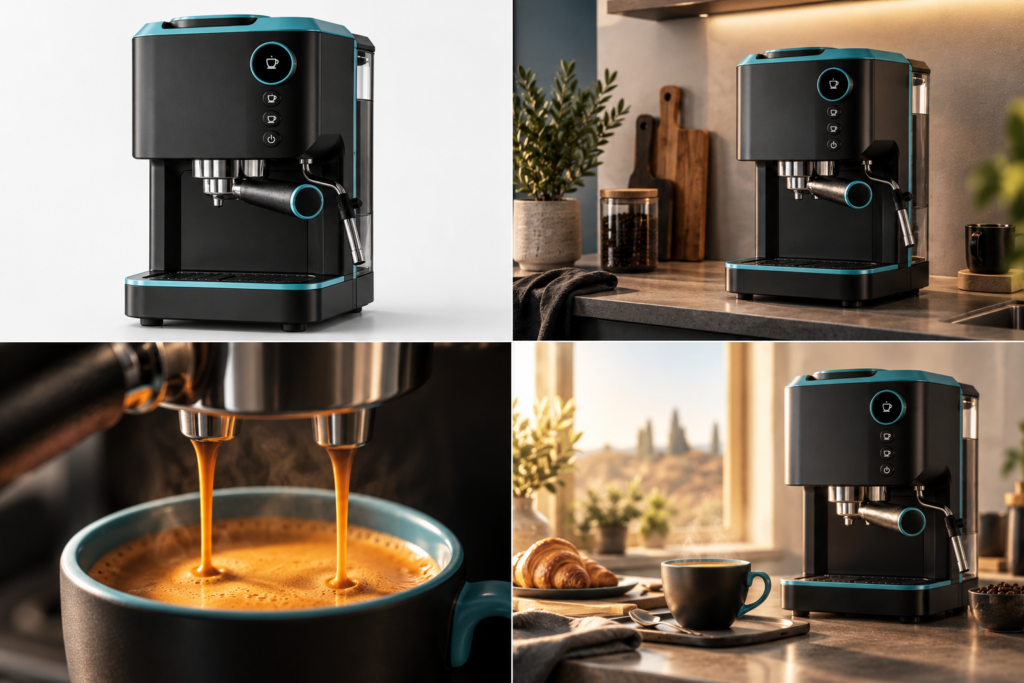
A product image on a plain background shows me what the machine looks like.
An image of the machine on a small kitchen counter shows me how much space it takes up.
A close-up of espresso and crema shows me what kind of result I can expect.
An image featuring the cup, the machine, and the soft light of an early morning creates a mood.
Those are four different communication tasks.
That’s why I find the question “How many product images do we need?” less interesting than:
What question does each individual image answer?
If three images communicate the same thing, we haven’t necessarily communicated three times as effectively.
What Does This Mean for My Product Presentation?
Before writing my next product description or planning an image gallery, I’d ask myself a few questions:
Who’s on the other side?
What situation, problem, or desire has brought this person to my product?
What questions arise before the purchase decision?
Dimensions, materials, compatibility, usage, price, what’s included?
Which product features answer those questions?
This is where product data and technical specifications come into play.
What do those features mean to the customer?
Now information becomes an argument.
Where do I need emotion, and where do I need clarity?
Not every product needs a story. Every product needs clear communication.
A coffee mug with cat eyes can absolutely be called Ilona. A 7 mm open-end wrench probably shouldn’t.
Fundamentally, this isn’t all that different from a good conversation.
I need to understand the other person, select relevant arguments, and communicate my message in a way that gets through.
The only difference is that, in e-commerce, the person on the other side might be sitting on their sofa at 10:37 p.m., looking at my product page.
Conclusion: Presenting Products Means Communicating
At the end of the day, our Dolce Vita is still the same espresso machine.
1,350 watts. Thermoblock heating system. 15-bar pump pressure. 1.2-liter water tank. Steam wand.
We need those details.
But now we also know what we can do with them.
We can explain, provide context, make arguments, answer questions, and create an emotional connection where it makes sense.
That’s why studying rhetoric has changed the way I look at e-commerce.
To me, a product page is no longer just a collection of images, keywords, and product features.
There’s a person on the other side.
And we’re having a conversation with them.